

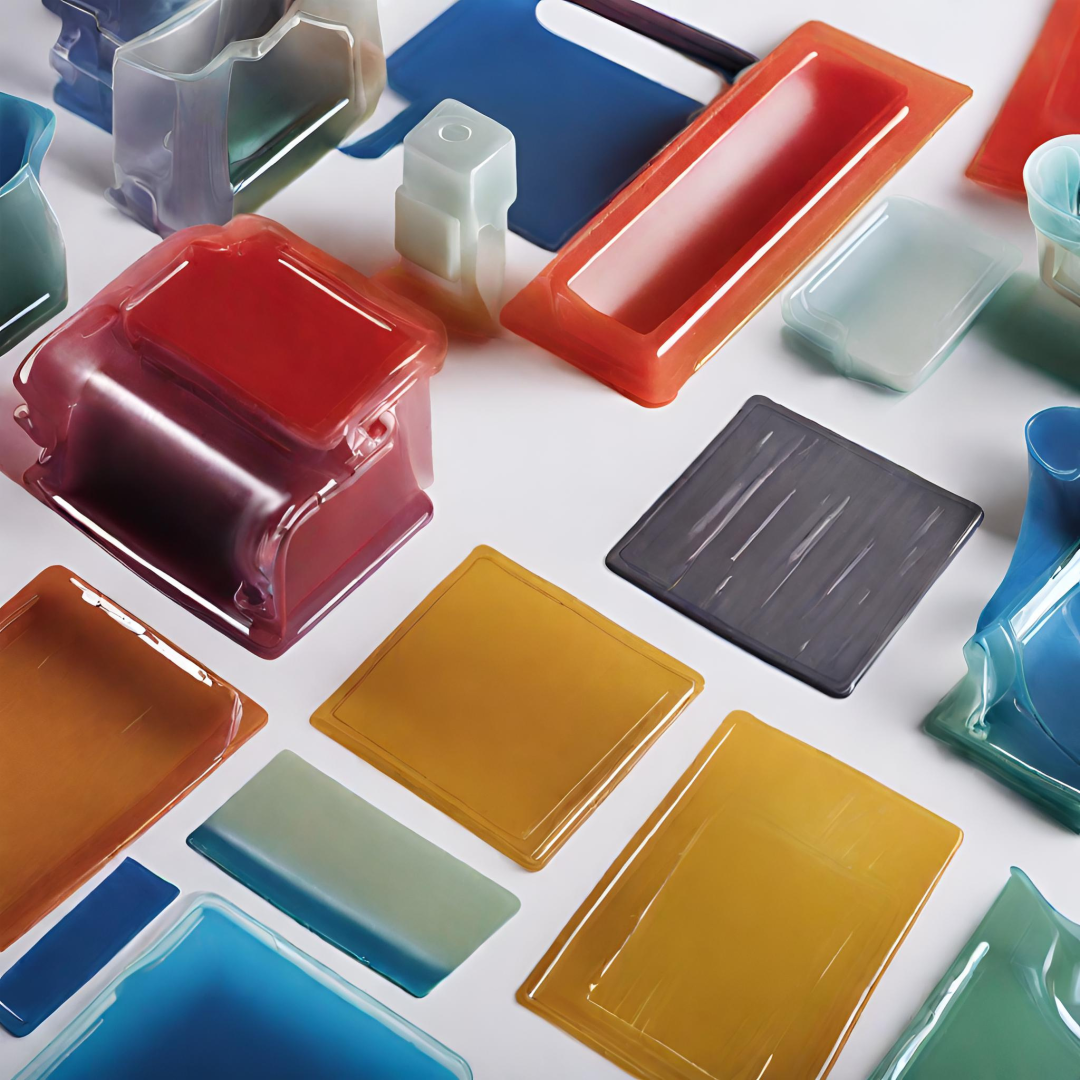
Printing on plastic involves various techniques tailored to different needs. These techniques are crucial for adding branding, information, or decorative elements to plastic items.
1. Screen Printing:
• Suitability: Best for flat surfaces.
• Process: Uses a mesh screen to transfer ink onto the plastic through open areas of the screen.
• Advantages: Cost-effective for large quantities, versatile in terms of ink types.
2. Pad Printing:
• Suitability: Ideal for irregular shapes and small or curved surfaces.
• Process: Involves transferring ink from a silicone pad onto the plastic.
• Advantages: Precise and detailed prints on non-uniform surfaces.
3. Digital Printing:
• Suitability: Suitable for detailed and full-color prints directly onto plastic.
• Process: Utilizes digital files to apply ink, often with UV-curable inks for better adhesion.
• Advantages: High-quality prints, quick setup, and customization.
4. Offset Printing:
• Suitability: Mainly for large production runs and flat surfaces.
• Process: Transfers ink from a plate to a rubber blanket before applying it to the plastic.
• Advantages: Consistent high-quality prints for mass production.
5. In-Mold Labeling (IML):
• Suitability: Common in the packaging industry.
• Process: Integrates labels with graphics into the mold before plastic injection, creating a seamless finish.
• Advantages: Durable and attractive labels without post-molding application.
6. Hot Stamping:
• Suitability: Used for adding metallic or colored finishes.
• Process: Applies heat to transfer foil or pre-dried ink onto the plastic surface.
• Advantages: Provides a decorative and visually appealing finish.
The selection of a specific technique depends on the intended use, design requirements, production volume, and the characteristics of the plastic material being used.